About Hirano Kotoken
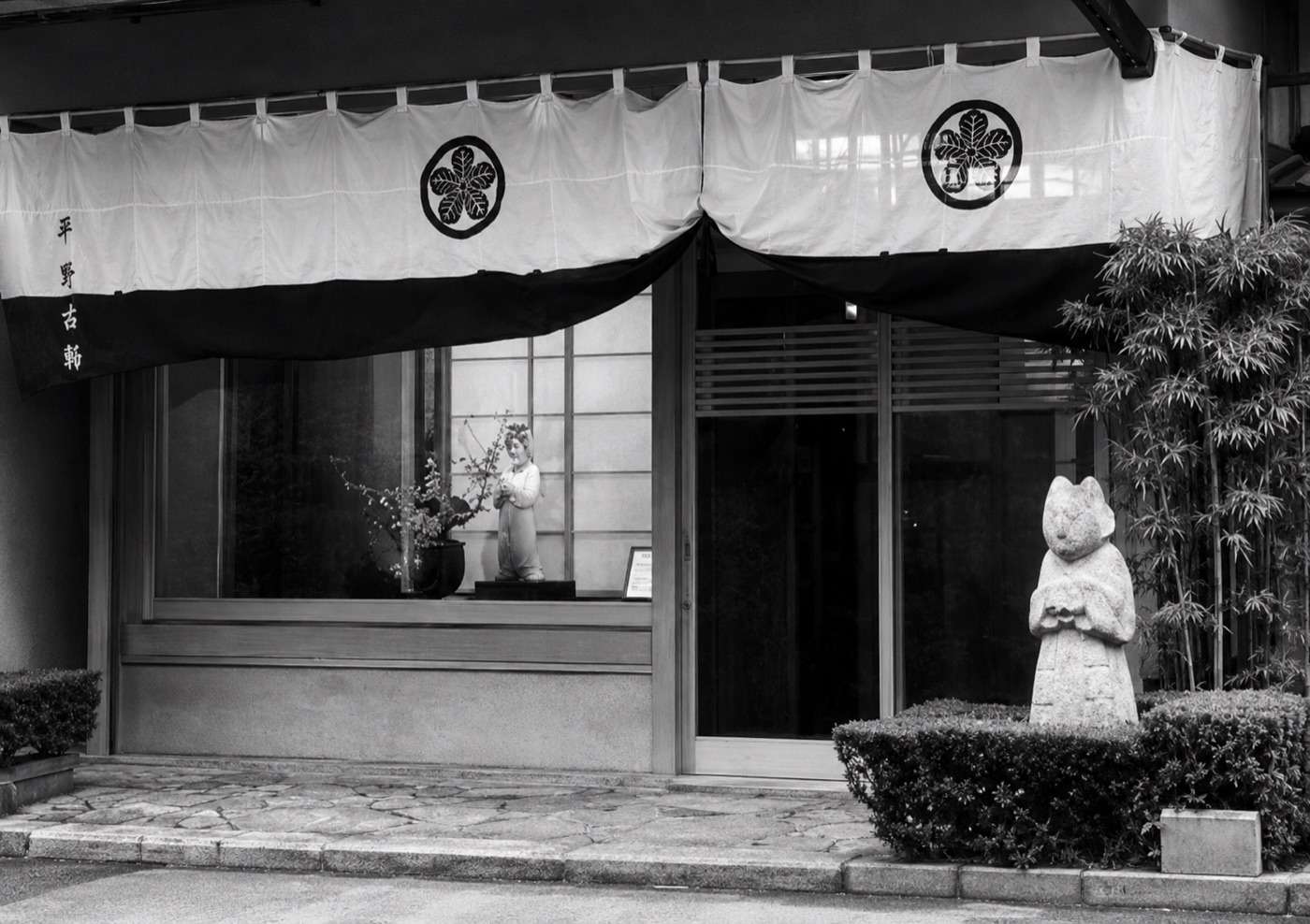
Hirano Kotoken is a dealer of Chinese and Korean antique art, founded in Osaka in 1936. Across three generations, the gallery has introduced Chinese and Korean ceramics to museums and collectors in Japan and abroad. Today, based in Kyobashi, Tokyo, Hirano Kotoken continues to bring people into new encounters with antique art, backed by a discerning eye and a proven track record in art valuation.
Our History Across Three Generations
1936 — Founding
The First Generation: Ryoji Hirano — The Founding Story
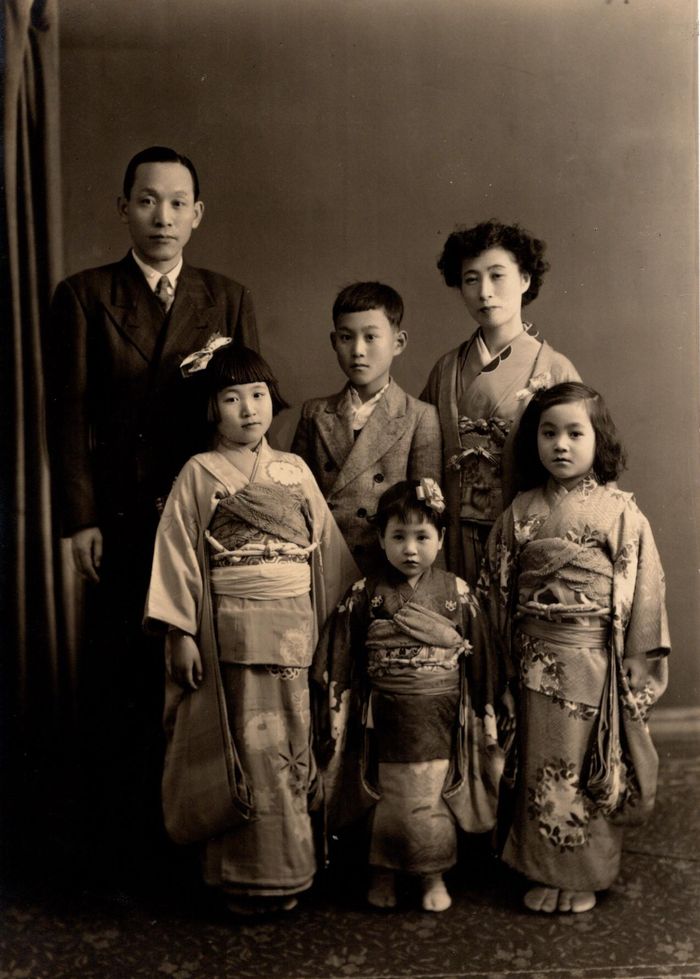
The founder of Hirano Kotoken, Ryoji Hirano, was born in 1910, the fourth son of a farming family in Osaka. After graduating from junior high school under the old education system, he joined Asano Chikuseki Sanbou, a gallery specializing in Chinese art, through the introduction of his elder brother Tatsujiro, who was already established in the antique art world. Asano Chikuseki Sanbou was run by Umekichi Asano, later known as the "walking dictionary of Chinese art." Accompanying his employer on trips to Beijing and Shanghai, Ryoji gained first-hand exposure to art on the Chinese mainland, and while still young he brokered several thousand works of art on behalf of Yamanaka & Co., a dealer conducting business on a global scale. In 1934, he also assisted with preparations for the opening of the Hakutsuru Fine Art Museum by Jihei Kano, deepening his knowledge of Chinese ceramics and archaic bronzes still further.
After seven years of training, Ryoji opened Hirano Kotoken in Osaka's Hirano-cho district on 26th February 1936. The name "Kotoken" was given to him by his mentor, Umekichi Asano. His elder brother Tatsujiro, who had already built a successful antique art business in Beijing, lent his network of contacts and supplied a number of fine bronze pieces, providing crucial support to the newly founded gallery.
The following year, Ryoji met a client who would remain especially important to him throughout his life: Sazo Idemitsu, later the founder of Idemitsu Kosan, introduced through an antique dealer in Moji, Kitakyushu. Sazo Idemitsu's love of celadon led to a relationship with Hirano Kotoken that would continue for many years and remain invaluable to the gallery.
However, as the era darkened with the Second Sino-Japanese War and then the Pacific War, Hirano Kotoken was forced to close temporarily in 1943.
1947 — Postwar Rebuilding
The Development of Hirano Kotoken — Postwar Rebuilding and a Widening World
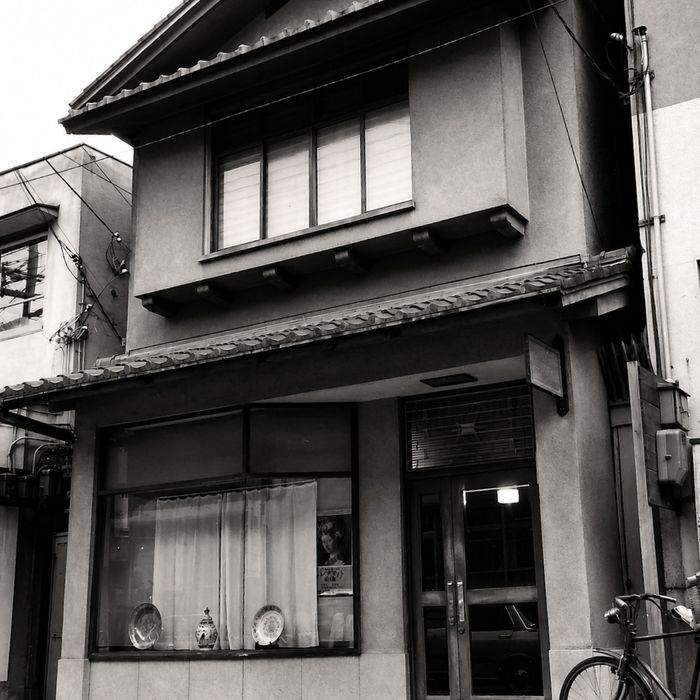
Two years after the end of the war, in 1947, Ryoji built a new shop in Oimatsu-cho, Kita Ward, Osaka, and reopened Hirano Kotoken. His brother Tatsujiro, who returned from internment in Siberia, joined him, and the two worked side by side to rebuild the business.
In 1958, a visit from Jiro Enjoji of Nihon Keizai Shimbun marked the beginning of a lasting friendship, and Eiichi Ataka, known as a collector of Korean and Chinese ceramics, also became a frequent visitor. In 1966, a masterpiece that Ryoji sold to Ataka — the russet-splashed celadon vase, yuhuchunping, passed down through the Konoike family — is today housed as a National Treasure in the Museum of Oriental Ceramics, Osaka, a piece emblematic of Hirano Kotoken's connoisseurship.
In time, Ryoji came to know internationally active antique dealers and collectors such as Edward T. Chow, Jean-Pierre Dubosc, and Roger Bluett, and Hirano Kotoken's reputation spread beyond Japan to the wider world. The international outlook and relationships of trust built during this era would be passed on to the next generation.
1971 — Second Generation
The Second Generation: Tatsuo Hirano — A Leap Onto the World Stage
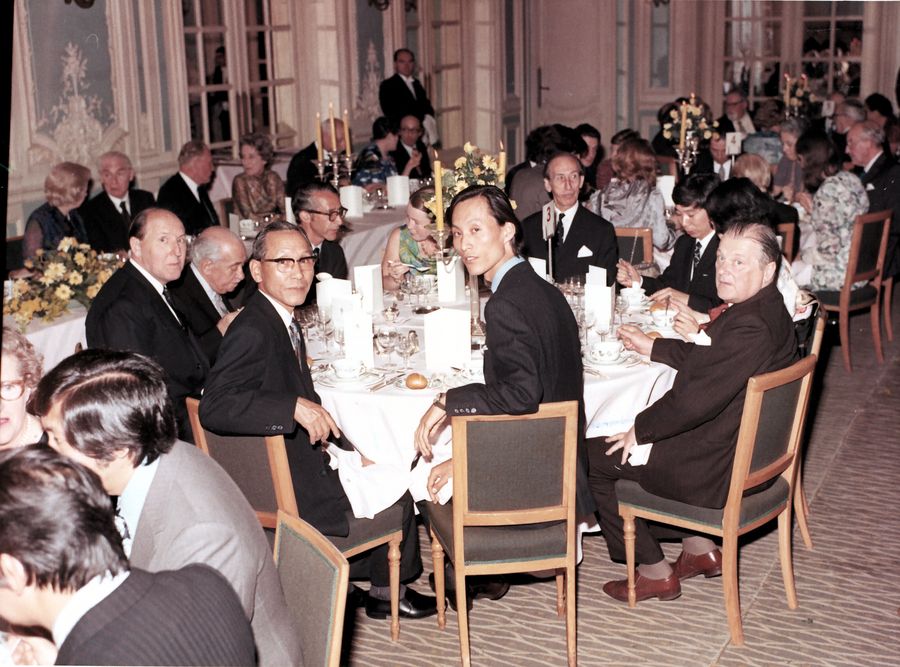
Ryoji's son Tatsuo was born in 1939, and became drawn to the world of antique art while accompanying his father on client visits during his time at Kwansei Gakuin University. When Tatsuo told his father of his wish to join the family business upon graduating, Ryoji advised him to first train in another field, and introduced him to Yayoi Gallery in Ginza, Tokyo. After nine years of training there, Tatsuo finally decided to become independent — and rather than taking over his father's shop in Osaka, he looked to the future of Hirano Kotoken and opened a Tokyo branch in Ginza in March 1971.
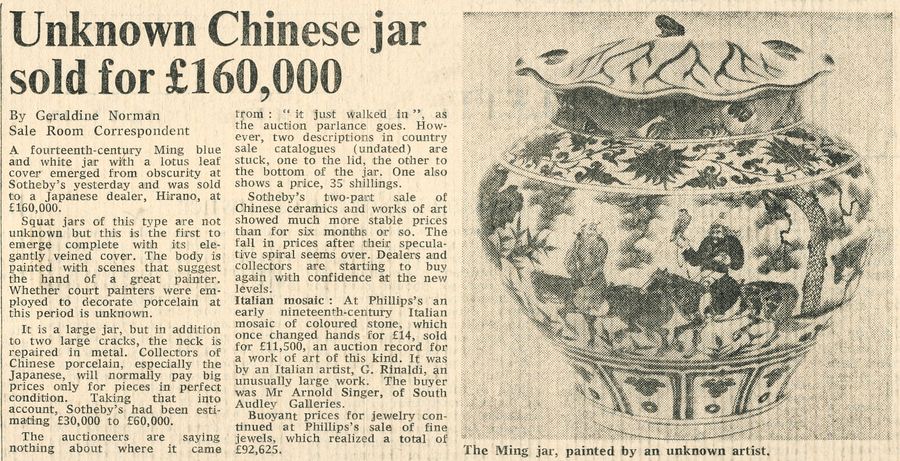
Recognizing early the importance of overseas markets, Tatsuo travelled frequently to international auctions at Sotheby's and Christie's, and built a wide circle of friendships around the world, including Giuseppe Eskenazi and Richard Marchant in London, Joseph Chan in Hong Kong, and James J. Lally in New York — leading antique dealers active on the global stage. In 1981, his purchase in London of a blue-and-white "dragon and cloud" jar bearing the Xuande mark, at a record price for Chinese ceramics at the time, remains an unforgettable episode in the Hirano family's history. The piece later passed into the hands of Sazo Idemitsu, and is still treasured today in the collection of the Idemitsu Museum of Arts.
In 1988, to mark the 50th anniversary of Hirano Kotoken's founding, work began on a catalogue, Kotoken Senka, featuring 101 selected pieces from among those the gallery had handled. Ryoji himself wrote a foreword for the catalogue, but passed away shortly before its completion and never saw it published. Around the same time, in 1987, in order to build a new venue for trading in the Japanese art market, Tatsuo and fellow dealers established the Shinwa Art Auction, and he went on to lead the art world's transformation for many years as an auctioneer at the rostrum.
2007 — Third Generation
The Third Generation: Ryoichi Hirano — Into a New Era
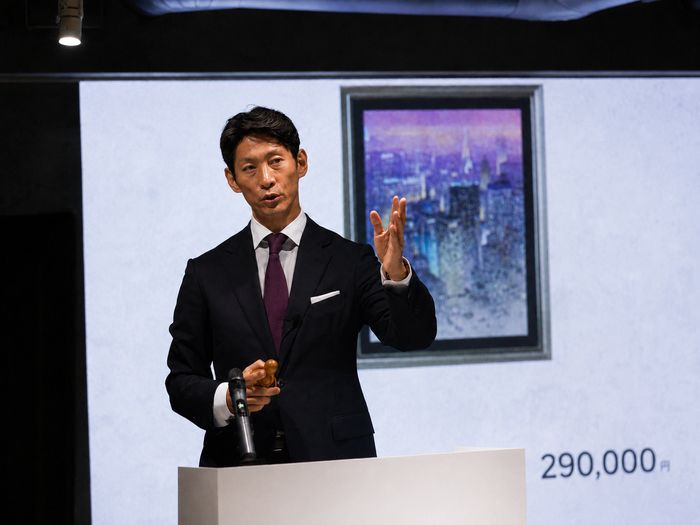
Tatsuo's son Ryoichi was born in 1971. After studying economics at university, he joined Yayoi Gallery — where his father had once trained — in 1994, beginning his career in the art world. After thirteen years there, he reopened Hirano Kotoken in Kyobashi, Tokyo, in 2007.
Around five years after becoming independent, Ryoichi was invited by Sotheby's to join as a senior specialist in Chinese art, and decided to step away from the gallery for a time. Over seven years based in New York, London, Paris, and Hong Kong — engaging with art from around the world, and including a period as Representative Director of the Japan office — he gained an exceptional depth of knowledge and an extensive network of contacts.
Then, in October 2018, Ryoichi returned to Kyobashi as the representative of Hirano Kotoken, coming back to the essential work of an art dealer: engaging directly with clients over each work of art. Carrying forward Ryoji's connoisseurship and the world-class perspective that Tatsuo pioneered, Hirano Kotoken continues today to offer new encounters with antique art centred on East Asian, Chinese, and Korean ceramics.
Museum Collections in Japan and Abroad
Since its founding, works handled by Hirano Kotoken have entered the collections of leading museums in Japan and abroad. The russet-splashed celadon vase, yuhuchunping, which the first-generation Ryoji sold to Eiichi Ataka, is now held as a National Treasure by the Museum of Oriental Ceramics, Osaka, while the blue-and-white "dragon and cloud" jar handled by the second-generation Tatsuo, among other masterpieces, is preserved in the collection of the Idemitsu Museum of Arts.
Japan
- Idemitsu Museum of Arts
- Museum of Oriental Ceramics, Osaka
- Kyoto National Museum
- Nezu Museum
- Hakutsuru Fine Art Museum
- Sen-oku Hakukokan Museum
- Osaka City Museum of Fine Arts
- Tenri University Sankokan Museum
- Aichi Prefectural Ceramic Museum
- Tekisui Museum of Art
- Itsuo Art Museum
- Kosetsu Museum of Art
- Kurokawa Institute of Ancient Cultures
- Tamashin History and Art Museum
- Dewazakura Museum of Art
Overseas
- Victoria and Albert Museum (London)
- Musée Guimet (Paris)
- Freer Gallery of Art (Washington, D.C.)
- Museum of Fine Arts, Boston
- Art Institute of Chicago
- Asian Art Museum of San Francisco
- Saint Louis Art Museum
This record of museum collections in Japan and abroad stands as testament to the discerning eye and deep understanding of art that Hirano Kotoken has cultivated across three generations.
What We Value
What matters most to Hirano Kotoken is not price or valuation, but discerning a "universal beauty" that never fades with time. We believe that truly beautiful things continue to speak anew to the human heart, even after hundreds of years have passed.
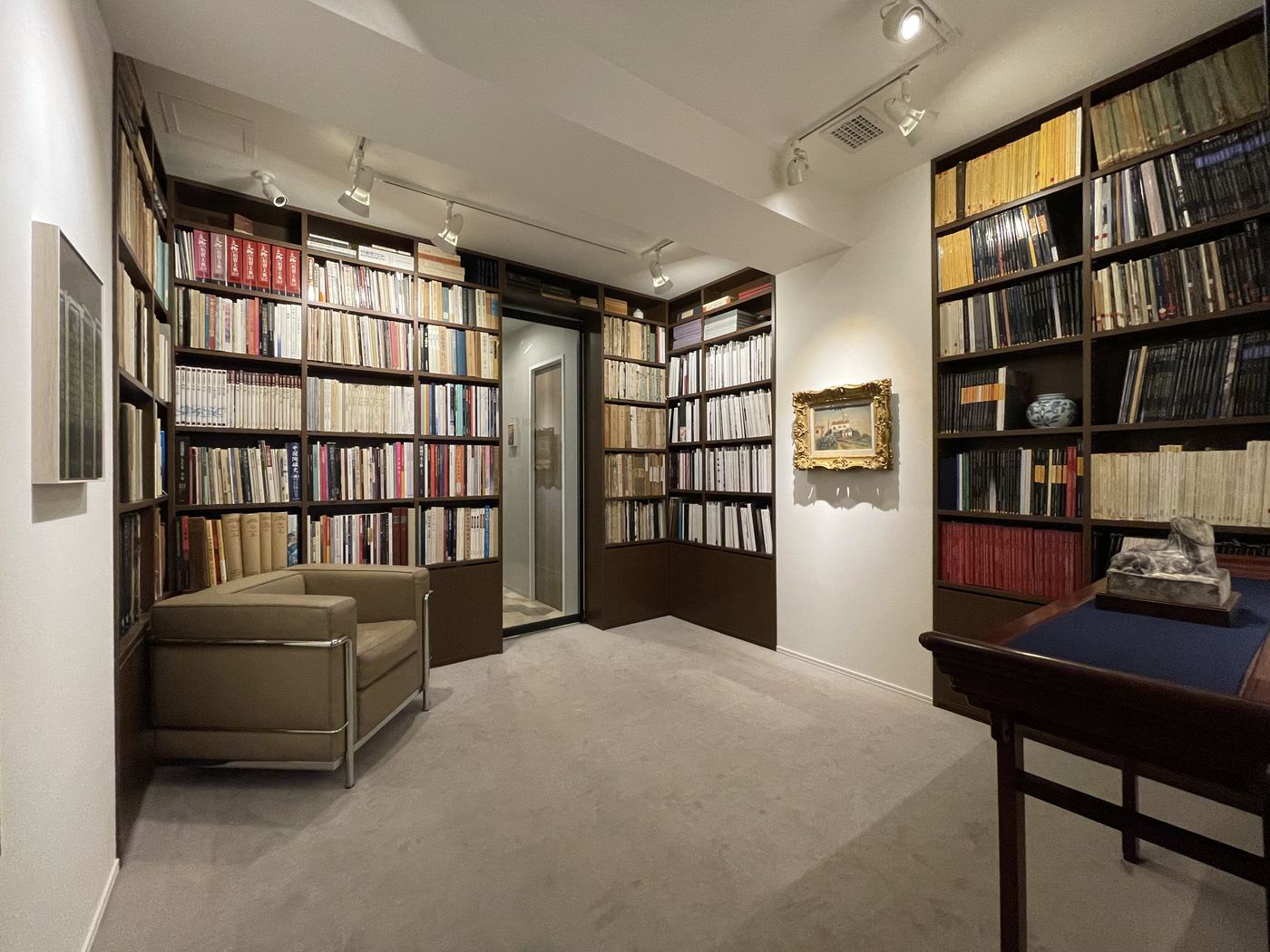
We do not put a newly acquired piece up for sale right away. First, we keep it at the gallery or somewhere close at hand for a time, living alongside it in our daily lives and gradually deepening our understanding of it. Only once we have studied the literature and come to a genuine appreciation of its qualities do we pass it on to its next owner — and for some pieces, this process can take years.
We also encourage ways of enjoying antique art that go beyond displaying it as a special object reserved for the tokonoma alcove — placing it alongside contemporary art, for instance, in a manner that crosses eras and genres. We believe that old things possess a brilliance that never fades, and we hope that people will come to feel that value as part of their everyday lives.
Contact & Access
Hirano Kotoken welcomes a wide range of inquiries — from consultations on selling Chinese and Korean antique art, to valuations of inherited estates. Please feel free to reach us by phone, email, or in person (by appointment).
Hirano Kotoken handles a wide range of inquiries from both individuals and corporate clients — from consultations on selling antique art, to valuations of inherited estates, and impairment accounting or M&A due diligence for corporate clients. We welcome consultations at our Kyobashi gallery, and for clients further afield, an initial consultation by phone or email is also available.
- Phone
- +81 3-3535-2587
- info@kotoken.co.jp
- Visiting the Gallery
- By appointment (phone or email)
- Address
- 4F Kyoseido Building
2-11-10 Kyobashi, Chuo-ku
Tokyo 104-0031, Japan
- 3-minute walk from Kyobashi Station (Tokyo Metro Ginza Line)
- 1-minute walk from Takara-cho Station (Toei Asakusa Line)
- 10-minute walk from Tokyo Station (JR / Shinkansen)